
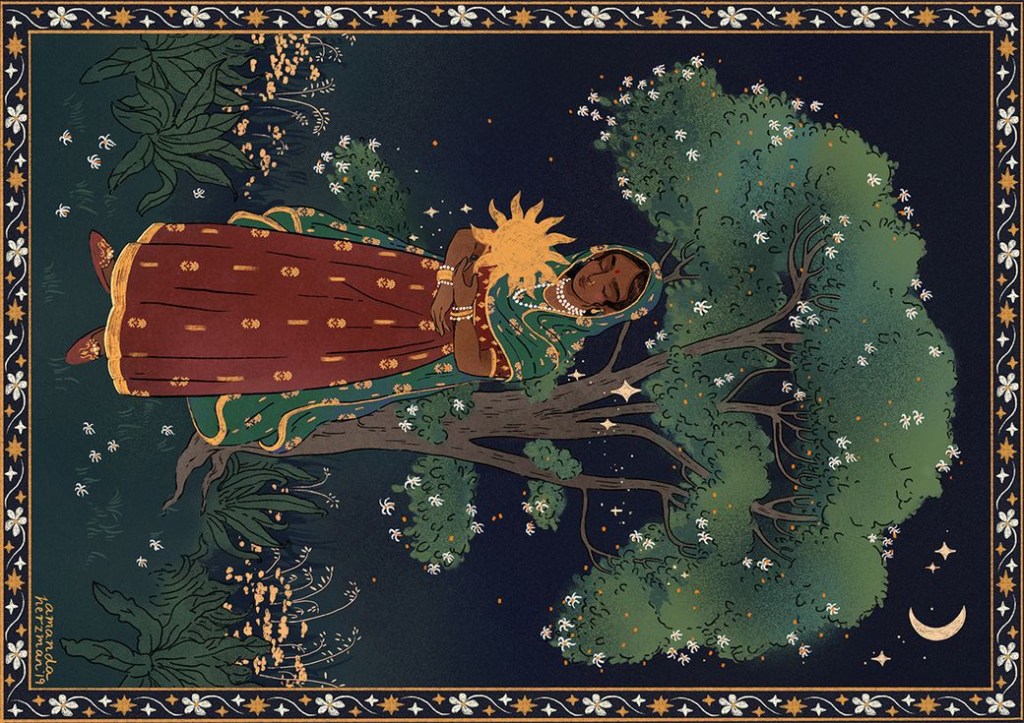
By Raiyana Malik
I love roots. I love learning more about where something or someone started. The beginnings. How it all became. I go crazy over family trees—I love to analyze, dissect them and read names. I think that might be a reason as to why I find royal families so interesting.
I’ve always thought of roots as something grounding, a connection that binds us to where we come from. But as a third-generation Canadian, I sometimes feel like my own roots are a tad frayed. Both sets of my grandparents came to Canada from Pakistan in the 1970s, planting the seeds of my entire family here. They brought with them their language, traditions and culture, but over time, some of that feels like it hasn’t fully carried over to me.
I can understand Punjabi when it’s spoken, and sometimes I even think in fragments of it. But speaking it back feels like a bridge I can’t quite cross. The pronunciation never comes out right, and there are moments where I pause mid-sentence, unsure of how to convey my thoughts in the language of my ancestors. It’s the same with Urdu—there’s understanding but not fluency, connection but also a quiet disconnect.
Sometimes, this leaves me feeling like I’m on the outside looking in; like I’m tethered to my culture but not immersed in it. As a baby, I picked up on speaking Urdu but as I grew up, stubbornly, I shoved it away. Now as an adult, I regret the decisions of my childhood everyday.
However, I try to remind myself that culture is fluid and connection comes in many forms. No matter what, my roots are still there, even if they look different than my grandparents’ or parents’. They show up in the values I carry, the way I listen closely when elders speak and the foods I love—like my dadi’s pilau and my nani’s biryani.
I can almost taste the memories of family meals, each bite reminding the joy of sharing something deeply rooted in tradition. The values of family, respect and hospitality that I carry with me every day come from the lessons passed down from my parents, and lessons learned from their parents. It’s in the way I pay attention to what my elders have to say, the reverence I feel when I hear them reminisce about a life I never lived, and the effort I make to stay connected to my family’s history.
I may not fully inhabit the world of my ancestors, but I still carry it with me. Every single day. And maybe that’s enough.
میری جڑیں ہمیشہ میرے ساتھ ہیں۔
Meri jurein hamesha mere saath hain.
My roots are always with me.
 Riadh Magazine