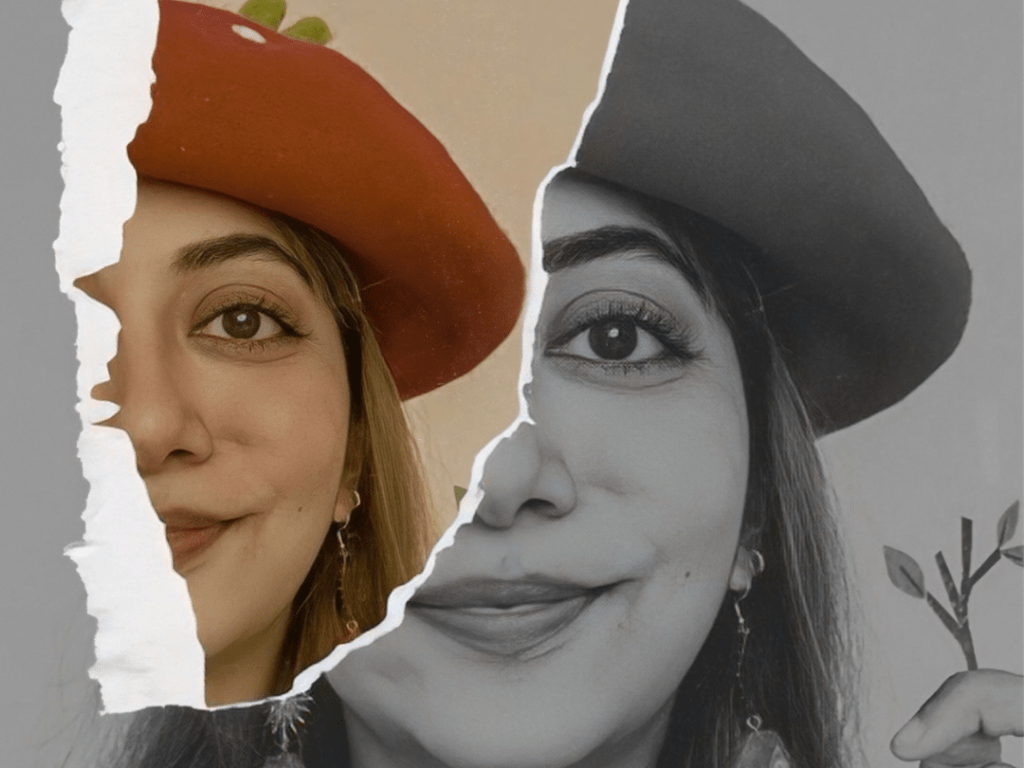
By Hadiqah Khalil
A fresh scent of pages surrounds the bookstore walls, the sound of children’s shuffling feet make their way in and air that is filled with deep sentiments of nostalgia welcomes Pakistani-Canadian author and illustrator, Anoosha Syed. On a gloomy Sunday in late March, Type Books at 2887 Dundas St. W in Toronto celebrates the launch of Syed’s new children’s book. Children gasp while taking turns passing around the handmade versions of art featured in the book. Their little fingers border the edges of the sheets, barely touching the already dried paint.
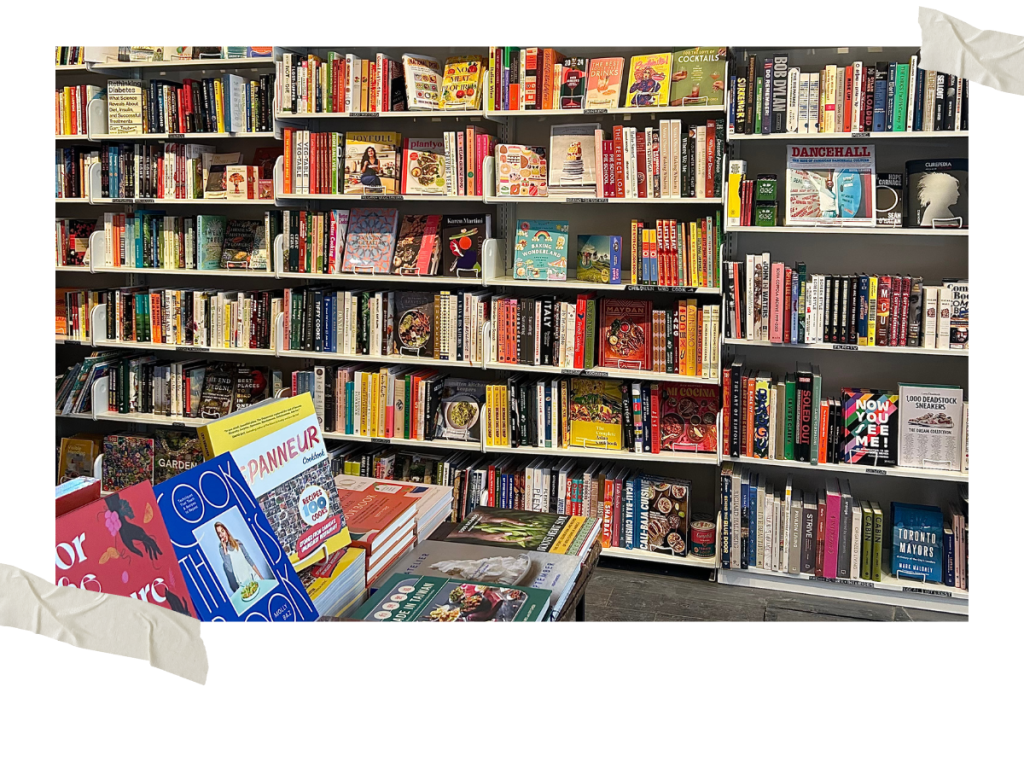
A long line of customers reach the front desk of the store as they wait for a custom signing of the book. As much attention was drawn to this new release, an earlier book makes a return and shines brightly once again. Nearby on display stands Syed’s first author-illustrator release in July 2022, That’s Not My Name!
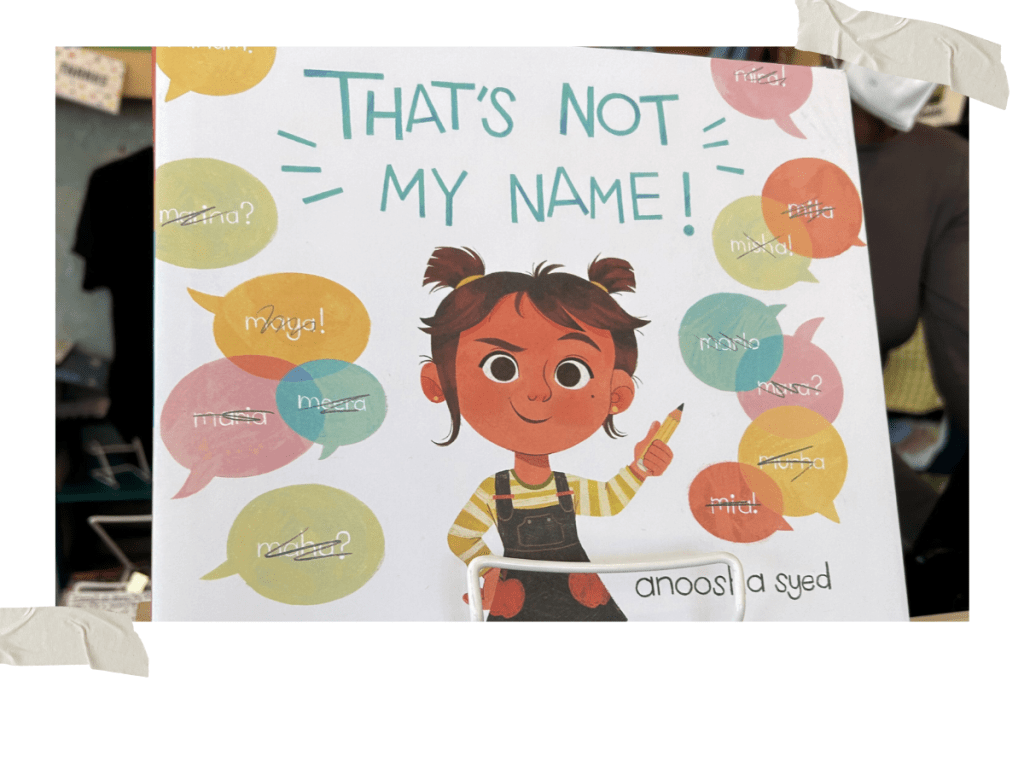
Nominated for a 2023 Blue Spruce Award and a read aloud with nearly three million viewers on TikTok, That’s Not My Name! tells the story of a young school girl named Mirha reclaiming the “challenging” pronunciation of her ethnic name.
Syed is grateful this book shot her to fame, but feels the burden of being typecasted as someone who is solely capable of writing South-Asian stories. “After That’s Not My Name!, I said that I didn’t want to do it anymore,” she says. Syed fills the void in a world where South-Asian stories are scarce. Being one of the few successful brown women in the industry who can be the voice for the voiceless, she hopes to transcend the labels beyond just a South-Asian figure.
A few weeks prior, the 31-year-old Pakistani-Canadian children’s book illustrator walked through the doors of a café in Mississauga with a bright smile. The chill wind of mid-February gusts through the front doors and she grips onto her black winter jacket, closing it in around her stomach to keep warm. Although it was lunchtime, she just ordered a decaf iced coffee stating that she had a heavy breakfast of halwa puri, a traditional Pakistani breakfast made of chickpea curry and deep fried bread. Her wide gazing eyes were warm yet cartoon-like just as the white star patches on her grey sweater.
Syed first discovered her love for art back in high school when growing up in Lahore, Pakistan. She was extremely attentive, talkative yet shy in her demeanor. Due to her love for writing, she initially had an interest in journalism before her teacher needed someone to illustrate the monthly comics. Given that Syed possessed the exclusive skill to draw, she landed the job.
On account of her father’s international company, Syed moved a lot: from Pakistan to Saudi Arabia, Dubai and finally Switzerland. She was presented with two options while living in the French-speaking city of Lausanne: attend an English speaking liberal arts school to study journalism or an all French speaking arts school for illustration named Ceruleum Ecole d’arts Visuels. She breathed a heavy sigh of relief saying she took the latter risk and learned another language in the process. As she struggled to make friends in her early years as a student, she immersed herself into her artwork in and out of school hours.
Syed said her parents did not initially want her to be an artist. “I was extremely stubborn,” she said. She brushed her fingers through the pieces of caramel highlights that peeked through her dark brown hair. “I think they saw that I was interested in animation and were like, humour me a little bit.” Three years after graduating with only 10 other students, Lausanne did not have many animation opportunities so Syed landed in Toronto to kick off her career in 2015.
Referring to when she was younger Syed said, “If you didn’t see a brown person, either you had no representation or bad representation.” Her slight smile went beyond her intense gaze as she hesitated on what to say next. “We’re either all terrorists, ride camels to school or just have to be okay with the bare minimum…my favourite Barbie was a Native American and that was good enough for me,” she said.
When we approached the topic of her famous debut book, That’s Not My Name!, she seemed grateful yet showed subtle un-amusement with the topic, almost like she had been asked about it too many times now.
The validation she received from this book was truly fulfilling for her. “Oh! I know Pakistan too…and I’m Muslim!” Syed said that refrained whispers of excitement bursted out from a six-year-old girl at one of her school visits.
Amidst the crowd of unfamiliar faces, Syed finally found a spark of recognition igniting in the eyes of children who whisper but hope to shout in proclaiming their identities.
She treasures every memory, drawing and craft — even if it is a bracelet gifted to her that only fits the size of a kindergartener’s wrists. These moments are more than just school visits. They are a chance for children to reclaim the “challenging” pronunciation of their ethnic names, especially after listening to the live read aloud of That’s Not My Name!.
“It’s a book that I wish I had as a kid,” Syed said. Although she wanted to be an author, it was not something that she thought she could actually succeed in. When Syed was illustrating other author’s stories, she was lucky enough to get into the industry at a time where diverse books for children were on the rise. She seemed abundantly aware and humbled of her privilege as a South-Asian figure, “If I am not the one writing these stories, no one else will.”
“It’s a very common thing where white male authors get to illustrate books about goofy things like dragons and fairies, and I got stuck with a heavy identity story,” Syed said. It is clear how she gives much thought on the burdens of a South-Asian figure in the children’s book industry with her collected thoughts on both aspects of the spectrum. “I was feeling like publishers weren’t caring about [what I had to say],” Syed said.

Two years ago, Syed felt that her work stagnated after That’s Not My Name! got released, “I didn’t like the stuff I was making, or even my drawings, so I ended up taking a month-long break.” Although this remarkable story gained worldwide attraction, Syed hopes to challenge herself with every project, giving way to her author-illustrator book released in March 2024: Lost Stick.
Jim Hoover, art director for That’s Not My Name! and Lost Stick spoke about supporting Syed through the new release. “The editor thought that there hadn’t been enough in [Lost Stick], I said to them at one point to just let a South-Asian author do a fun book about a fun dog. I think it meant more to Anoosha than it did to me,” said Jim Hoover, in an interview.
Lost Stick is a friendship story between Louise and her dog Milo, who failed to fetch a stick thrown to him. After Milo travelled the world far away from Louise seeking for this lost stick, he realizes home with his owner is where he wants to be.
With Lost Stick being Syed’s first comedy book, she wants people to know that she has range as a brown girl in the industry. Her tone sounded like it was resisting the temptations of excitement, as she explained how she is more than just a Pakistani-Canadian personality. “I think that it’s okay to fail and make ugly stuff sometimes,” Syed laughed.
Aneeka Kalia, editor of That’s Not My Name! and Lost Stick encouraged Syed to tell stories through her other personalities and interests, hence going forth with the creation of Lost Stick. “At Viking, we all agreed that this was a risk we were willing to take in a new direction for her career,” said Aneeka Kalia, in an interview. She believes it is unfair to ask marginalized creators to only write from the perspective of their identity. “Oftentimes, non marginalized creators and white creators get to expand their storytelling interests and techniques a lot more than marginalized creators get to. So I get the feeling of being pigeonholed and type casted in a way,” Kalia said.
Syed always wanted to pursue a career in art ever since she watched the movie Tangled. “I hope my art can make people feel emotion,” she said. Her face lit up when she talked about her hopes and dreams. “I would love to make enough books to live off of royalties and chill,” Syed laughed, shrugging in a comedically modest way. She is now only focusing on one book a year and putting her all into it. Aside from illustrating stories, Syed earns income from guest speaking, author visits and making videos on her YouTube channel.
So here we are three years later, Anoosha Syed is pronounced AH-NOO-SHAH SAY-ID. That’s Not My Name! will continue to be read in homes before a father puts his daughter to bed, in marginalized school communities where teachers of colour are lacking and in libraries where children finally get a chance to be asked how to pronounce their names.
“Oh my gosh! Louise! You found stick!” The crowd giggles at the clever ending and applauds Syed after she reads the final words of Lost Stick. A smile crosses her face as she thanks the crowd for joining her while this new journey begins. Milo might have found his stick, but Syed finally found herself beyond the confines of a single title.
 Riadh Magazine
Leave a comment