By Raveeha Sayed
For centuries, Muslim women have observed modesty in accordance with their faith. Practising veiling and choosing to dress modestly is one they make of their own volition. Yet the critical eye of a passerby will always look twice.
“Are they forced?”
“Aren’t they feeling hot?”
“You should take it off—you look prettier without it.”
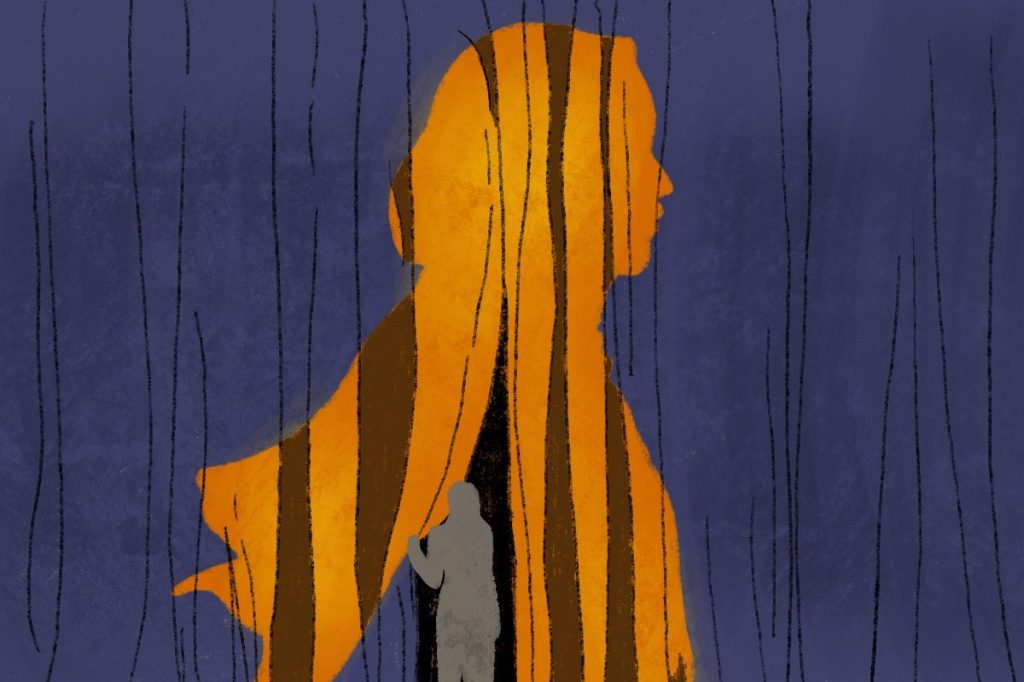
These are just a few comments that follow a hijabi woman’s path, no matter which direction she takes. Yet, we are not what you perceive us to be. Ours is a plight, an affirmation spoken far too often, yet understood far too little.
The westernized lens of Islamic identity can be traced back to colonialist inheritance. The concept that women are coerced into covering their heads, married off young and stripped of their autonomy, are just a few of the stereotypical narratives that Muslim women face. However, these dramatic portrayals demonstrate the moral superiority and authority of the West. It is in these stories that Muslim women are overlooked rather than recognized as self-determining people.
Fighting through these barriers is what drives many Muslim women to work twice as hard and lead with ambition. Not catering to a baseless and fictitious idea, but fighting for one’s own dream.
Muslim women carry themselves with the same grace and drive as our Western counterparts: academic success, extracurricular initiatives and a thriving social life. Yet this sense of maintaining part of your Islamic identity and staying connected to your roots through language, art, faith and dress is our visible assertion of selfhood.
Diasporic women are known to have an exceptional work ethic. Coming from hard-working families, they understand the values of sacrifice and resilience. The drive to excel is evident in their pursuits in academia and the workforce. Being an immigrant or a first-generation daughter teaches you the value of hard work, and striving for success is not only aspirational but also something we are held accountable for.
Yet the discerning lens of a peer or colleague will always make its way into the daily life of a hijabi. Women who enter predominantly white spaces or are in environments with a lack of diversity have always tried to blend and soften their presence. Yet there comes a time when assimilation loses its appeal, and the urge to integrate is substituted by the drive to embrace one’s identity and representation.
Why blend in when you can illustrate yourself, your religion and your modesty? Why conform to the status quo? Why not strive to change the norm to ensure an atmosphere where all may prosper?
The idea behind being forced to wear a hijab demonstrates that oppression is a cultural practice, not a religious one. People who use religion out of proportion to further their own personal agenda based on their idea of Islam, are those who distort religion for control.
History holds cruel accounts of contorted religion for politicized agendas, as during the Islamic Revolution in Iran, the mandated hijab played a role in the wrongful discernment of Islamic identity.
Western interpretations can be traced back to colonialism, when the East was thriving. Yet, upon the arrival of colonialist forces, they labelled veiled women as oppressed rather than respecting their autonomy. Veiling became misunderstood and politicized, taken for whatever the naked eye wanted to see but far from the actual lived experiences of Muslim women.
Muslims also internalized this idea that parts of their own culture were inferior, further pushing people’s agenda of wanting us to fit in rather than exist unapologetically.
Why should modesty be culturally specific when freedom in feminist history has also been exclusionary?
Freedom in feminism is commonly known as: the right to vote, sexual liberation and autonomy, yet these are fights that are catered to the West. These struggles are integral but preliminary. Freedom must also include the right for a woman to express herself in whatever garment she desires. If a woman is to show skin that is empowering, yet a woman who chooses to cover herself is labelled as oppressed. Racism and imperialism have furthered the narrative that a woman’s body is not her own. Which body is liberated and which is scrutinized?
Hijabi women in the diaspora always have to fight to prove that they are not oppressed. Constantly reminding people that they wear the veil out of their own freedom to embrace their identity and faith, yet their words echo back at them.
Muslim women are loud, courageous and unafraid to speak their truth. They refuse to bow to social expectations and thrive in their endeavours. They define success on their own terms and are the authors of their own stories and lives—with or without a veil.

 Riadh Magazine
Leave a comment