By Naureen Janjua
I was peacefully sleeping in my bed until I opened my eyes. “Why is it so yellow?” I thought to myself, still half asleep. It almost looked like I had woken up too early, maybe around 6:00 am, so I decided to go back to sleep.
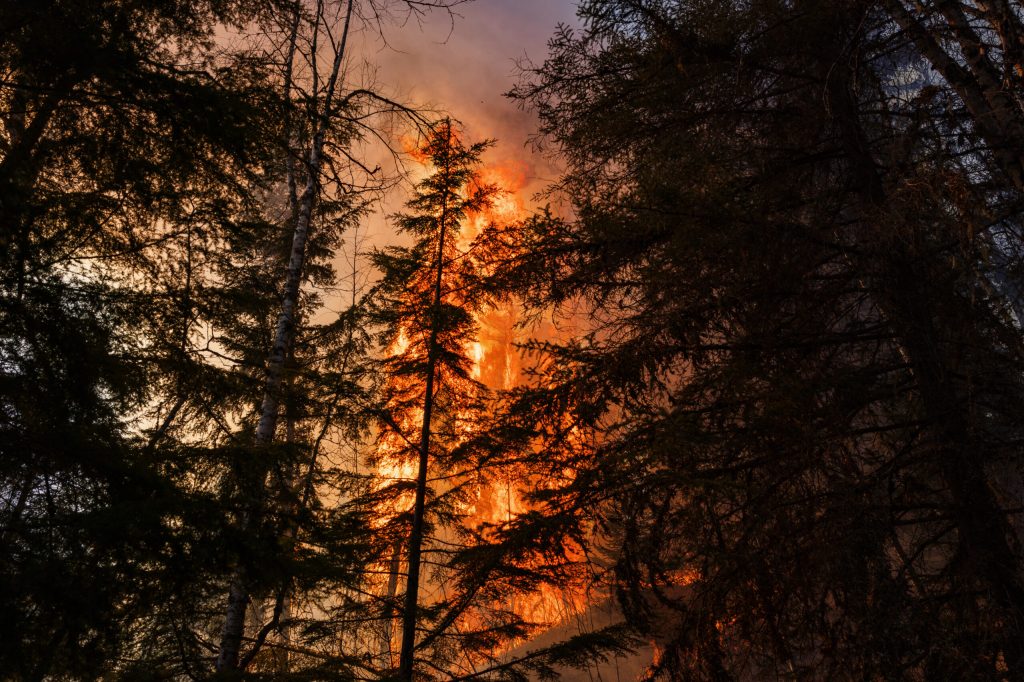
Shortly after some time, I woke up again, thinking it was still early due to the intense, mustard-like yellow sky. This time, I decided to check the time. It was definitely not early; it was already past 10:00 a.m. And the sky was still so yellow. I was dumbfounded, but I knew there was only one reason for this: climate change, or more specifically, the Canadian wildfires that blanketed our skies this last week. For me, the yellow sky lasted only a short time. But for Indigenous Peoples and the communities living closest to the fires, it was far more than an unusual sight. It wasn’t just a yellow sky—it was a crisis that threatened their homes, their health and in some cases, even their lives.
On July 16, 2026, Canada was hit by nationwide wildfires. While many seem to think the wildfires are over since they’re gone in our area, this issue is still very much a reality for Indigenous communities in northern Ontario. More than a week after the yellow smoke had cleared, Global News reported that 180 fires are still burning across northern Ontario, where many Indigenous communities are located.
Wanting to better understand how these fires were affecting Indigenous communities, I came across content creator Nikki Apostolou’s video. She is a part of the Indigenous community who shared her thoughts as someone affected by the wildfires.
“This has been dangerous for more than just natives, but because native people tend to live in more rural areas, we face these things with less ease. We don’t have equal access to health care services when needed or the ability to leave quickly when a wild fire is threatening our communities,” Apostolou said in our interview.
Her concerns echoed those of First Nations leaders across northern Ontario. On July 22, 2026, CBC highlighted on TikTok a group of First Nations leaders pleading for a stronger response to the wildfires. One of the leaders desperately said, “I am crying for your help”. The government’s response? Silence.
And so, during an interview with CBC, Member of Provincial Parliament of Ontario, Jill Dunlop was asked about criticism from Indigenous leaders. Within seconds, one of her staff members ended the interview, leaving many of the leaders’ concerns unanswered.
While government officials offered few answers, Apostolou said the impact of the fires extends beyond the communities directly threatened:
“While my community, Kahnawake Mohawk Territory, which is located just south of Montreal, hasn’t been in danger or immediate threat of wild fire, when something like this happens to one community, it affects all of us. It’s a reminder that because our traditional practices, like controlled burns, are no longer allowed, these wild fires are as out of control or as widespread as they are. It’s a reminder that colonialism is still affecting us, and as a whole, the traditional way of life still isn’t fully allowed. We aren’t the stewards of the land as we are supposed to be. When one community has to relocate and evacuate, experiencing the level of damage they have, all of us feel it,” Apostolou said.
Climate change is a real issue, not a hoax. Climate change is a long-term shift in Earth’s average temperature and weather patterns. The main cause? Human activities. Humans consume Earth’s resources for our own benefit. This includes burning fossil fuels such as coal, oil and gas for energy, as well as deforestation, the practice of cutting down trees for materials and agriculture. These activities release large amounts of greenhouse gases, including carbon dioxide and methane, into Earth’s atmosphere.
Despite Canada having extremely cold winters, we are heating up—our warming is twice the global rate.
The cause of climate change for non-Indigenous Peoples was just mere smoke. But for the Indigenous Peoples and communities, they are at the frontlines of these harsh wildfires. We’ve slowly stopped seeing headlines about the wildfires, yet fail to realize the everyday norm for some. While we got to sit at home and watch the smoke clear out. Indigenous communities were forced to flee to safety with barely any supplies, and their struggles are being overlooked simply because Toronto is no longer being affected. For centuries, Indigenous Peoples have called this land home. They fought to protect it when settlers arrived and have spent generations defending their rights to it, only for climate change to threaten the land so deeply connected to their identity and way of life.
It’s easy to feel like climate change is too big of a problem for one person to make a difference. But the truth is, change often starts with small choices. Taking public transit instead of driving, eating more plant-based meals, reducing food waste or buying second-hand are all simple habits that can lower our environmental impact. They may not stop a wildfire on their own, but they are steps toward protecting the planet we all share.
Supporting Indigenous communities can be just as meaningful. Donating to Indigenous organizations, listening to Indigenous voices and learning about the challenges these communities continue to face are ways to stand in solidarity. For many Canadians, the smoke has disappeared, but for many Indigenous communities, the crisis hasn’t.
“We have been here since time immemorial, and no one knows this land better than we do! This wouldn’t just benefit Natives, but a return of land and land stewardship would benefit anyone living on Turtle Island,” Apostolou said.
The yellow sky outside my window lasted only a day. For others, the consequences of climate change are part of everyday life. What we choose to do after the smoke clears says just as much as how we react while it’s here.

 Riadh Magazine
Leave a comment